Overview
Handling the reboot reason is an important mechanism implemented in automotive ECUs. An MCU based system may reboot for several reasons and without a reliable logic to distinguish the different scenarios, system behavior can become unpredictable, leading to failed updates, incorrect startup decisions.
One practical solution is the implementation of a reboot reason mechanism, where a small piece of information is preserved across resets and evaluated during early startup. This allows the software to make deterministic decisions, such as whether to remain in the bootloader, jump to the main application, or resume an interrupted operation like a firmware download.
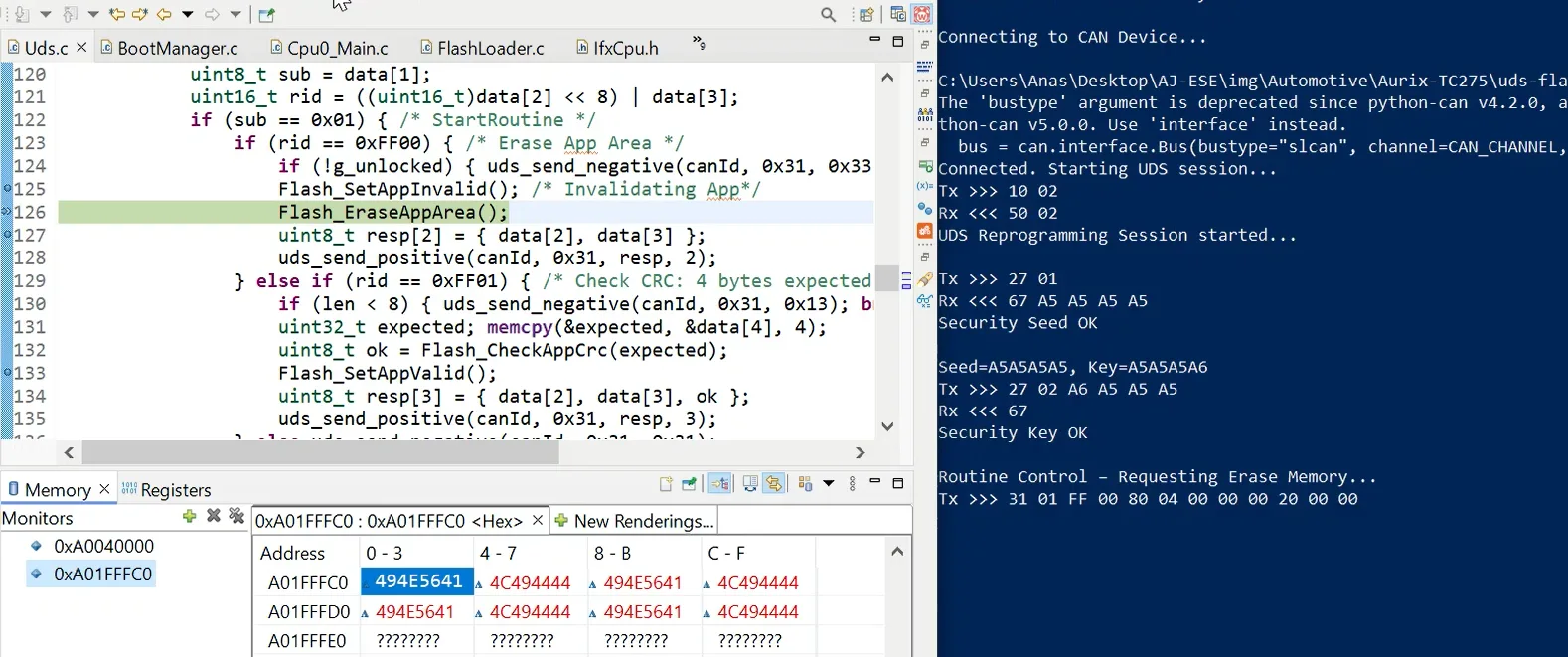
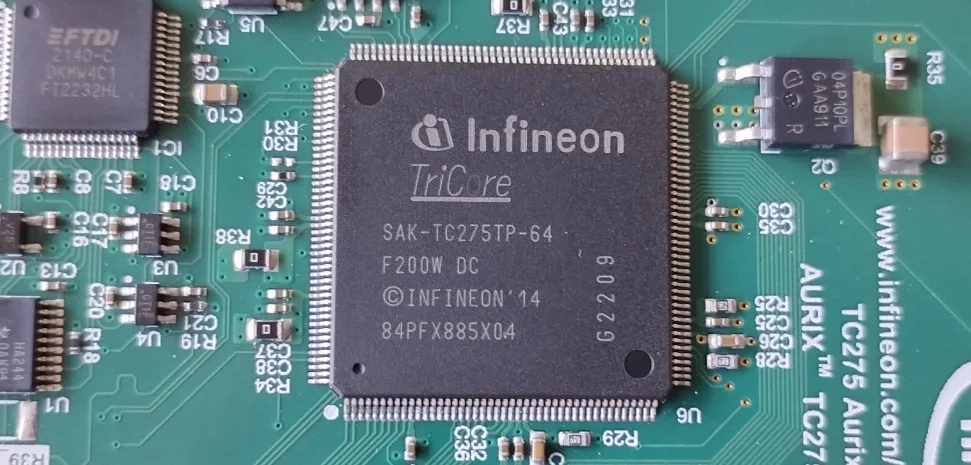
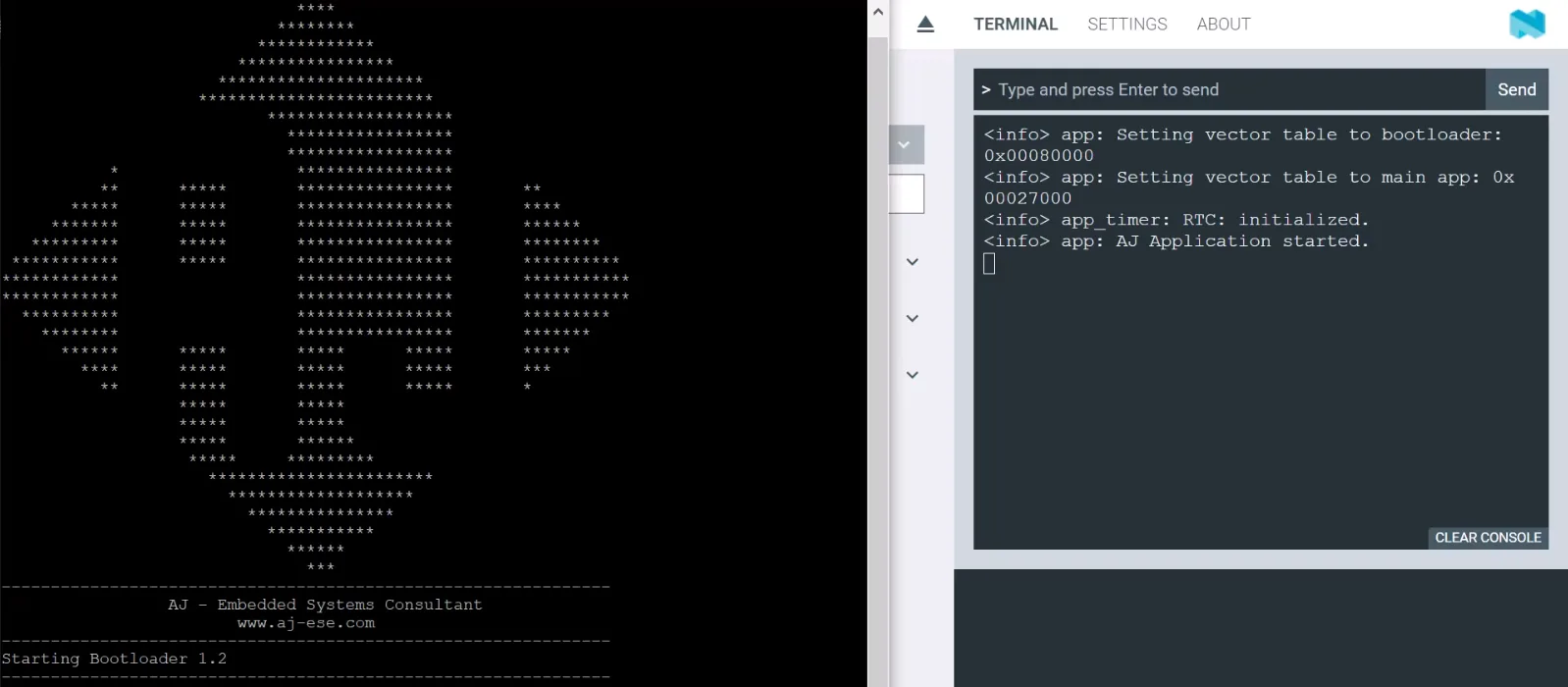
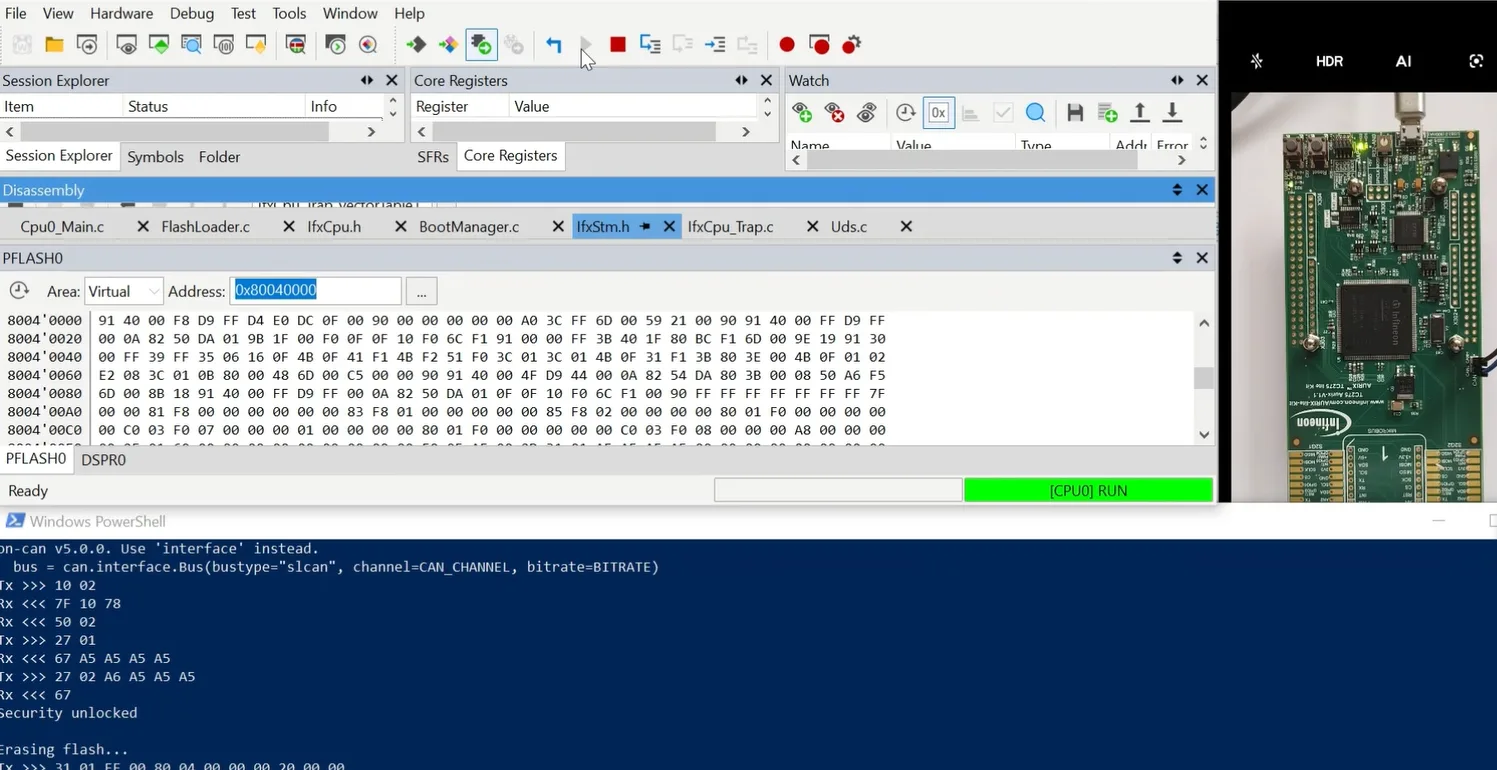
In this article, we will explore how to design and implement a robust reboot reason mechanism using a shared non initialized RAM structure that survives software resets. We will focus on a practical use case: entering a flash bootloader from a software application in response to a UDS 0x10 0x02 (programming session) request using Aurix TC275 MCU. Key aspects such as memory placement, data integrity checks, and the interaction between bootloader and application will be discussed.






Leave a Reply